




Menopause is widely understood as a hormonal life transition, yet its impact on your skin is one of the least talked about, and least prepared-for, parts of the journey.
If your skin suddenly feels drier, less firm or less like your own, you're not imagining it, and you're not alone. This is a real change and understanding what's happening is the first step to caring for your skin with confidence along the journey.
What happens to your skin during menopause?
Menopause has clear implications for the skin, and the impact on women should not be underestimated.2 As estrogen declines, your skin produces less collagen and elastin, its natural hyaluronic acid decreases, and its protective barrier weakens.1-3,22 Together, these changes lead to increased dryness, lines and wrinkles, a loss of firmness and elasticity, and duller skin tone.1
The effect on collagen is striking; skin can lose up to 30% of its collagen in the first five years after menopause, and around 2% each year after that.2,3 Because collagen is the scaffold that keeps skin firm and smooth, this loss shows up as sagging, lines and a loss of the bounce your skin once had.1,2
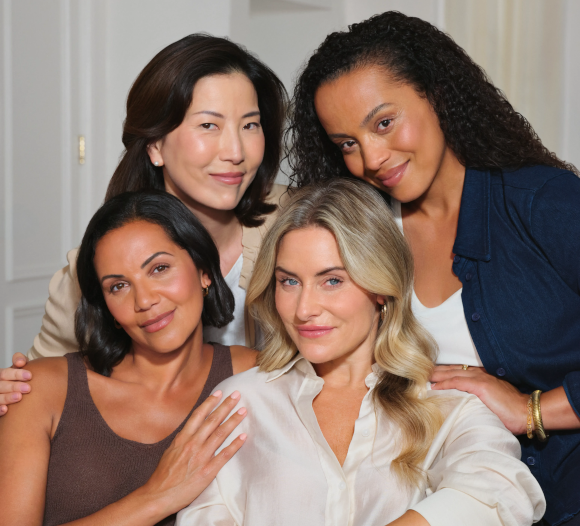
“The hormonal changes that come with menopause significantly affect the skin – decreasing collagen, elastin and hyaluronic acid can result in loss of firmness, wrinkles and dryness. This accelerated deterioration in skin health can impact women’s confidence and self-perception. It’s therefore important that this forms a core part of menopause conversations and that women understand there are solutions, like aesthetic treatments, that can prevent or reverse these changes and help women feel more like themselves again.”
Dr. Doris Day
Board-Certified Dermatologist, U.S.

These are the same qualities that make up your overall [skin quality] (hydration, firmness, elasticity, smoothness, radiance and even tone), which is why menopause can affect how your skin looks and feels across the board.1,23
Menopause is not just skin ageing. It’s a multi-layer structural transition that impacts the skin, fat pads, and bone.1,4,5,24 Some women gain weight with age, which can increase facial fat volume.4,6,22 Some women also experience fat pad displacement.4, 24 Additionally, bone resorption begins 2 years before the final menstrual period, peaks about 1 to 1.5 years after menopause, and remains about 20% elevated for several years after.7
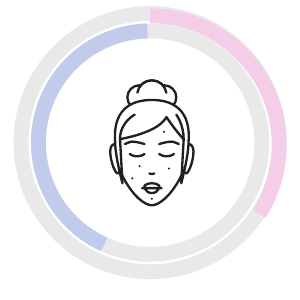
How skin changes at each stage
Menopause isn't a single moment. It's a journey, and skin changes can begin earlier than many women expect.
- Perimenopause: the transition leading up to menopause, when hormones begin to fluctuate. Symptoms and skin changes can start years before your periods stop, and because hormones rise and fall unpredictably, this stage can feel the most disruptive.10,22
- Menopause: reached when you've gone 12 months without a period. Estrogen settles at a low level.10,22
- Post-menopause: The years afterwards, when estrogen stays low and skin changes such as dryness and loss of firmness may continue.11
Knowing where you are in this journey helps you have more informed conversations about how to support your skin through every stage.

Menopause not only impact how the skin looks but also how women feel
Skin changes during menopause can affect how you feel. In the same survey, women said these changes made them feel less attractive (60%), anxious (57%), less confident (55%) and less sociable (46%).1
If that resonates, know that these feelings are common, they're valid, and support is available. Understanding what's happening to your skin, and knowing there are ways to care for it, can make a real difference to how you feel in it.
Why so many women are caught off guard
One of the hardest parts of menopause skin change is how little it's discussed. In the survey, around half of women (52%) only learned about menopause's impact on their skin by going through it; about half first found out in their 40s, and roughly 1 in 3 wish they'd understood it earlier in their 30s.1 61% of survey respondents in Europe said they felt neutral, dissatisfied, or very dissatisfied with how much they knew.1
The most trusted source of information? Healthcare professionals.1
- Only 1 in 2 — are satisfied with their knowledge of menopause§†1
- 1 in 2 — learned how menopause impacts the skin through personal experience§1
- 61% — wish they had been informed earlier§†1
The takeaway: you don't have to wait until changes feel significant. Learning what to expect, and starting the conversation early, puts you in a stronger position to care for your skin through the whole transition.
How to support your skin through menopause
Supporting your skin through menopause works best as a personalised, layered approach.
Start with the foundations
Protecting your skin from the sun, using gentle, barrier-supporting skincare and looking after your overall health all help your skin cope with hormonal change.1,25
Consider professional aesthetic options
Because healthy-looking skin during menopause is about both skin quality and structural support, Galderma's portfolio offers complementary approaches:
- [Restylane Skinboosters] and the [Restylane®] range: hyaluronic acid treatments that provide deep hydration and a sustained glow, and help restore facial structure. 12-15
- [Sculptra®]: a regenerative biostimulator that works across all three skin layers to progressively support your skin's own collagen and elastin, helping restore firmness, thickness and overall skin quality.16-20
Women who have had aesthetic treatments were more content with their level of knowledge (52% satisfied or very satisfied) compared with those who have never had but would consider aesthetic treatments (37% satisfied or very satisfied), suggesting that aesthetic procedures support better education and knowledge around the impact of menopause on the skin.
Reference: 1. Galderma MAC research - Menopause - 2025
A qualified healthcare professional can recommend what's right for you.
What the experts say
Because healthcare professionals are the most trusted source on this topic,1 hear directly from dermatologists in our "Menopause: Skin Rewritten" series as they explain what's happening to your skin and how to navigate it.
Real menopause skin journeys
Every woman's menopause journey is different. These are a few real stories of caring for skin through the transition.
- Before
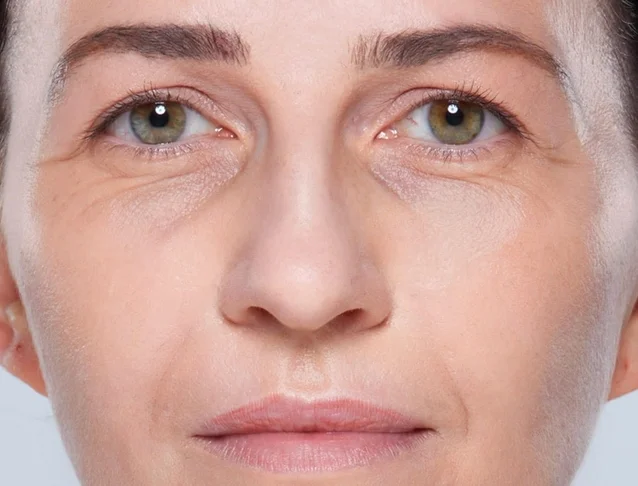 After
After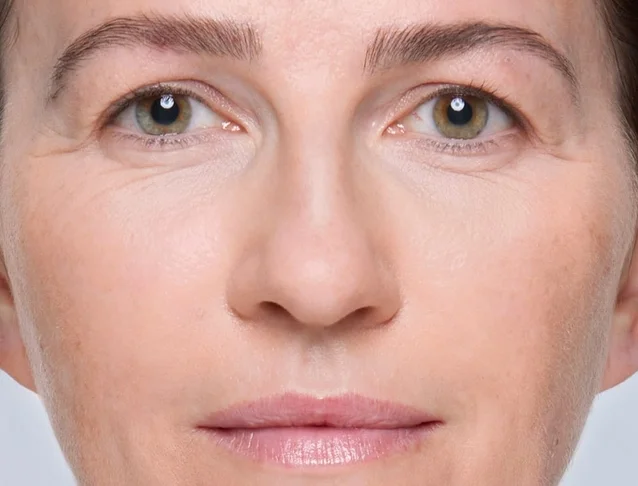
KARIS Treated with: Restylane® EYELIGHT™, 0,25ml /each side
Percentage of women who were very satisfied following the treatment/action.
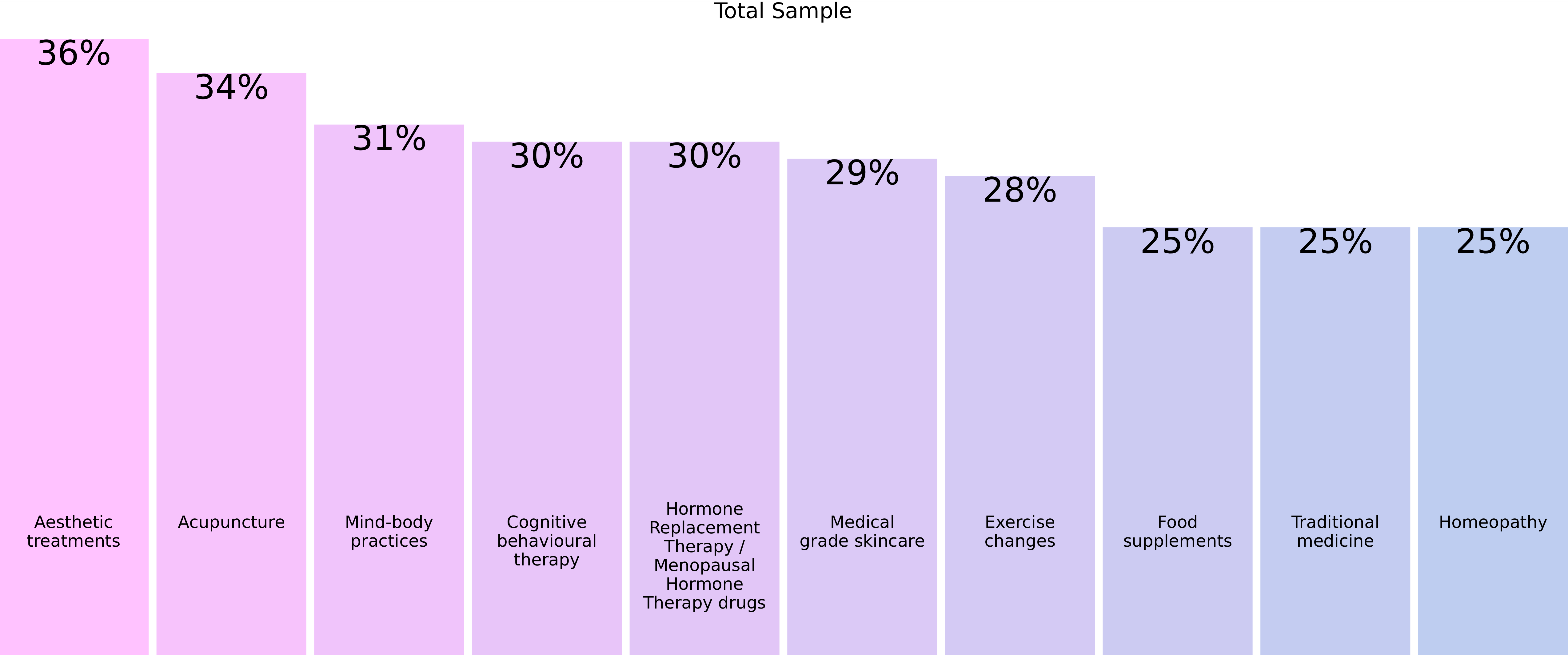
Reference: 1. Galderma MAC research - Menopause - 2025

As estrogen declines, your skin makes less collagen, elastin and hyaluronic acid, and its barrier weakens. This leads to dryness, thinner skin, loss of firmness and elasticity, and more visible lines and wrinkles on the face and body.1-3
Changes often start during perimenopause, sometimes years before your periods stop, because hormones begin to fluctuate early in the transition.2,21
Yes. Skin can lose up to 30% of its collagen in the first five years after menopause, then around 2% each year after that, which contributes to lines, sagging and loss of firmness.1-3
Increased dryness, loss of firmness and elasticity, lines and wrinkles, and a duller skin tone, affecting the body as well as the face.1
Perimenopause hormone fluctuations can make skin feel most unpredictable and reactive22; in post-menopause, estrogen stays low and changes such as dryness may continue.22
Yes, dryness and loss of firmness commonly affect the body, not just the face.1
You don't have to navigate it alone
Wherever you are in your menopause journey, understanding your skin is the first step, and you don't have to figure it out alone. A qualified healthcare professional can assess your skin, answer your questions and help you build an approach that's right for you.
You can also explore your overall [skin quality] and the specific [skin concerns] that can appear along the way.
Always consult your healthcare professional for individualised treatment recommendations and to discuss important safety information and the risks associated with any treatment.

Find a clinic
Don't let your skin concerns hold you back.
- Galderma MAC Research - Menopause - 2025
- Kamp E, et al. Clin Exp Dermatol. 2022;47(12):2117-2122.
- Thornton MJ. Exp Dermatol. 2002;11(6):487-502
- Donofrio L, Fat distribution: a morphologic study of the aging face. Dermatol Surg 2000;26:1107-1112
- Khosla S, Oursler MJ, Monroe DG. Trends Endocrinol Metab. 2012 Nov;23(11):576-81
- Tchernof A, Poehlman ET. Obes Res. 1998 May;6(3):246-54
- Sowers MR, Zheng H, Greendale GA, et al. Changes in bone resorption across the menopause transition: effects of reproductive hormones, body size, and ethnicity. Journal of Clinical Endocrinology & Metabolism. 2013;98(7):2854–2863.
- Wend K, Wend P, Krum SA. Tissue-Specific Effects of Loss of Estrogen during Menopause and Aging. Front Endocrinol (Lausanne). 2012 Feb 8;3:19
- Viscomi et al. Journal of Cosmetic Dermatology, 2025; 24(Suppl. 4):e703932025
- WHO - Menopause Factsheet
- Rzepecki A et al. J of Women's Dermatol. 2019
- Restylane Skinboosters Vital. European IFU.
- Kablik J, et al. Dermatol Surg. 2009;35(Suppl 1):302-312.
- Wu Y, et al. J Cosmet Dermatol. 2020;19(7):1627–35.
- Distante F, et al. Dermatol Surg. 2009;35(Suppl 1):389–94.
- Sculptra. EU IFU. December 2025.
- Waibel J, et al. J Drugs Dermatol. 2025;24(1):34-40.
- Huth S, et al. J Drugs Dermatol. 2024;23(4):285-288.
- Zubair R, et al. Dermatol Surg. 2024;50(12):1155-1162.
- Goldberg D, et al. Dermatol Surg. 2013;39(6):915–922.
- World population review. Age of menopause by country 2026.
- Bravo B, et al. Dermatological changes during menopause and HRT: what to expect? Cosmetics. 2024;11(1):9
- Fabi S, et al., Poster presented at IMCAS World Congress. 26–28 January 2023. Paris, France.
- Swift A, Liew S, Weinkle S, Garcia JK, Silberberg MB. The Facial Aging Process From the “Inside Out”. Aesthetic Surgery Journal. 2021;41(10):1107–1119. doi:10.1093/asj/sjaa339.
- AAD - Caring for your skin in Menopause